Warning on risks: Financial contracts for difference are complex instruments and are associated with a high risk of rapid financial losses due to leverage. On 77.44% of retail investor accounts, financial losses occur when trading financial contracts for difference with this provider. You should consider whether you understand how financial contracts for difference work, and whether you can afford to take the high risk of suffering financial losses. Please read the Risk Disclosures.

Novo Nordisk: Share price decline, attractive dividend, and an opportunity for long-term growth
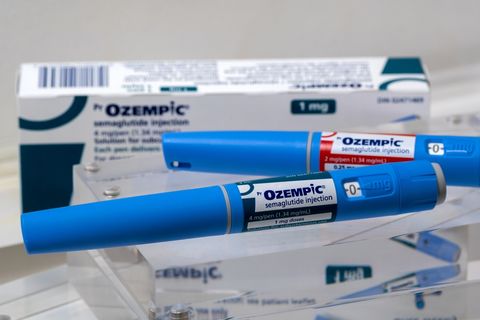
Novo Nordisk shares fell by approximately 15 to 20% after the release of a weaker outlook for 2026, which pushed down the valuation even though demand for Ozempic and Wegovy and for new oral GLP1 therapies remains strong.* At the same time, it is a company with a dividend yield of around 3.8% and a conservative payout ratio of approximately 50%, while consensus target prices still indicate double-digit percentage upside compared with the current share price. [1] [1]
About the company
Novo Nordisk is a global pharmaceutical company headquartered in Denmark that specializes in the treatment of diabetes, obesity, and other serious chronic diseases and is behind key GLP1 medicines such as Ozempic, Wegovy, and Rybelsus. The company was founded in 1923 and today operates through subsidiaries in approximately 80 countries, while distributing its products to around 170 countries worldwide. It employs approximately 69,000 people and invests heavily in expanding production capacity and in research into new biological therapies in order to meet growing global demand for diabetes and obesity treatment. The core of its strategy is to innovate in chronic diseases while also increasing access to treatment, which enables it to maintain a strong competitive position and long-term growth in both revenues and profits.[2]
Strategic position and long-term growth trajectory
Novo Nordisk holds a strong position in the global pharmaceutical ecosystem thanks to a combination of scientific know-how, large-scale production of biological medicines, and a focus on chronic metabolic diseases, with revenues from diabetes and obesity therapies forming the main part of income and having grown at a double-digit pace in recent years. The company is also investing billions of dollars in expanding production capacity and in research into new biological platforms and gene therapy, thereby creating room to maintain a technological lead over competitors and to enter new high-value-added indications. For investors, this means that even though 2026 is expected, according to the current outlook, to bring a temporary slowdown and pressure on margins, the long-term growth trajectory supported by demographic trends, the breadth of the portfolio, and investment discipline remains intact, and the price correction may be an entry point into a structurally growing story at a more favorable valuation. [2] [3]
Rising demand for obesity and diabetes medicines
A key long-term driver of Novo Nordisk’s value is the global rise in obesity and type 2 diabetes, with modern GLP1 medicines Ozempic, Wegovy, and the oral Rybelsus forming the backbone of its growth, and demand for them long exceeding supply. Moreover, 2026 is expected to be a breakthrough year for oral forms, as approval of tablet versions expands the potential market to patients who prefer a tablet form over injections, which can significantly increase the number of treated patients and support revenues even after pricing pressures ease. [3] In combination with the fact that obesity and diabetes are chronic diagnoses requiring long-term treatment, this represents structural demand that provides high visibility of future income and underpins the investment thesis even amid current volatility.[4]
The share price decline is an entry opportunity
The price of Novo Nordisk shares in recent weeks has been pushed down mainly by the unexpected outlook for 2026, when management indicated a decline in revenue and operating profit of 5 to 13% due to price pressure in the USA and intensifying competition, which led to a one-off drop of around 17% and to the worst year for the stock in the last decade.* From an investment perspective, however, this is a repricing of short-term risks, as the key demand for GLP1 medicines remains robust and sales volumes are actually increasing, while the pressure stems primarily from pricing and regulation rather than weaker product performance. Over the long term, the decline thus creates an opportunity to enter a high-quality growth pharmaceutical company at a lower valuation than the market considered acceptable as recently as the beginning of 2025. [4][5]
Strong dividend and return of capital
Novo Nordisk remains dividend-attractive even after the price correction, as at a price of around $49 per share, it achieves a dividend yield of approximately 3.7 to 3.8%, while over the last 12 months, it has paid shareholders a total of 11.65 kr. per share, which is about $1.84, and the dividend is paid twice a year. The next payment falls in April 2026, and long-term data show stable dividend growth, which complements the picture of a company that combines a growth story in obesity and diabetes with regular cash income for investors. A high ability to generate free cash flow, together with a healthy payout ratio, supports room for further dividend increases in the future without constraining investments in research and production capacity.[6]
Analyst target prices above the current price
Even after the sharp drop, the consensus analyst view on Novo Nordisk shares remains largely positive, with the American ADR NVO showing average 12-month target prices around $54.25 per share, which at the current price of around $49.6 implies approximately 9.4% expected upside, while the upper end of estimates at $70 implies potential appreciation of around 41%. [4] The target price range from $46 to $70 reflects different scenarios for margin development and drug pricing, but the fact that both the average and higher estimates are clearly above the current market price suggests that professional analysts view the current correction more as an opportunity to enter a long-term growth move than as a continuation of a lasting downturn.[7][8]
Conclusion
2026 will be a test for Novo Nordisk’s resilience to pricing pressures, intensifying competition, and a stricter regulatory environment, but the core story remains built on structural growth in demand for obesity and diabetes treatment and on a strong position in the GLP1 medicines segment. The current share price decline reflects mainly short-term risks and a worsened outlook for 2026, while the company’s long-term potential, supported by portfolio expansion, investments in production, and a stable dividend policy, remains preserved and represents an interesting opportunity for investors who can accept temporarily higher volatility.
* Past performance is not a guarantee of future results.
[1,2,3,4] Forward-looking statements are based on assumptions and current expectations that may be inaccurate, or on the current economic environment, which may change. Such statements are not a guarantee of future performance. They include risks and other uncertainties that are difficult to predict. Results may differ materially from the results expressed or implied in any forward-looking statements.
[1]https://www.euronews.com/business/2026/02/04/novo-nordisk-stock-sinks-by-17-after-bleak-2026-forecast
[2]https://www.novonordisk.com/about/who-we-are.html
[3]https://www.novonordisk.com/content/dam/nncorp/global/en/investors/irmaterial/annual_report/2026/novo-nordisk-annual-report-2025
[4]https://www.cnbc.com/2026/01/01/novo-nordisk-faces-must-win-battle-over-us-wegovy-ozempic-in-2026.html
[5]https://www.euronews.com/business/2026/02/04/novo-nordisk-stock-sinks-by-17-after-bleak-2026-forecast
[6]https://eulerpool.com/en/stock/Novo-Nordisk-AS-Stock-DK0062498333/Dividend